
The Silent Epidemic: Why Adult Acne is Surging and the Science of Solutions
The dermatological community confirms a significant and concerning trend: the rise of persistent and late-onset acne vulgaris in adults, particularly in high-SDI regions like the U.S. Up to 25% of women in their 40s now report active acne.
Why the Surge? The Two Core Triggers
The persistence of adult acne is a manifestation of two systemic dysfunctions:
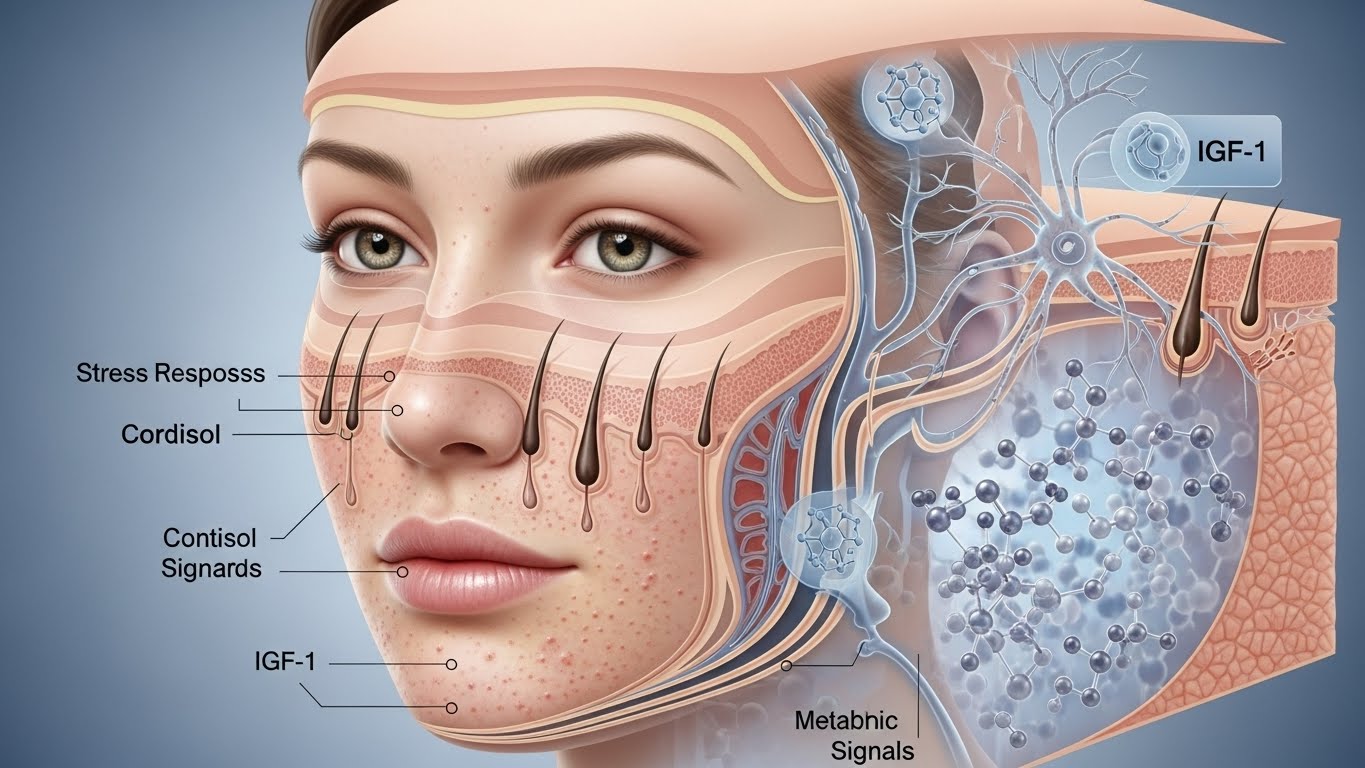
- Chronic Stress and the Neuroendocrine Axis: Sustained psychological stress elevates cortisol, which directly stimulates the adrenal glands to produce more androgens. This hormonal signal increases sebaceous gland activity, leading to excessive oil production and inflammation, a process routed through the Hypothalamic-Pituitary-Adrenal (HPA) axis.
- Metabolic Dysfunction: Modern diets high in refined carbohydrates and high-glycemic loads drive elevated Insulin and IGF-1 (Insulin-like Growth Factor 1) levels. IGF-1 is a potent sebum-stimulating factor and a keratinocyte growth factor, linking diet-driven metabolic stress directly to acne pathogenesis. Underlying hormonal conditions like PCOS frequently exacerbate this.
Scientific Solutions: The Multi-Modal Strategy
Effective management targets both the surface pathology and the systemic triggers:
- Topical Foundation: Use Retinoids (e.g., Adapalene) to normalize follicular cell turnover and Benzoyl Peroxide (BPO) to reduce the C. acnes bacteria and combat inflammation.
- Systemic Intervention: For hormonally-driven acne (typically lower-face), Oral Anti-Androgens (like Spironolactone) or specific Combined Oral Contraceptives are used to reduce circulating androgen effects on the sebaceous gland.
- Lifestyle Modulation: Rigorous stress management and adherence to a low-glycemic index diet are essential to dampen HPA and IGF-1 signaling, turning off the systemic triggers.
For severe, treatment-resistant cases, a course of Oral Isotretinoin remains the only intervention with the potential to offer permanent, long-term remission by irreversibly shrinking the sebaceous glands.
Related Posts

Leading charge in Regenerative & Longevity Medicine: Dr. Annu Navani’s Impact on Emerging Healthcare
Dr. Annu Navani stands at the...

The Hidden Health Crisis Among Executives: 5 Warning Signs You Can’t Afford to Ignore
Behind the polished boardrooms, private jets,...

As winter daylight wanes and circadian rhythms shift
As winter daylight wanes and circadian...

Healthcare technology is transforming how veterans manage their health and wellness.
Healthcare technology is transforming how veterans...

The Hidden Health Crisis Among Executives: 5 Warning Signs You Can’t Afford to Ignore
Behind the polished boardrooms, private jets,...